
Twenty-three years ago, 7,400 meters above sea level, Narayan GC climbed the jagged face of Mount Cho Oyu, the sixth-highest mountain in the world, on the border of Nepal and China. A blizzard had battered the final camp – only 800 meters from the summit – for three days. Winds hit 80 mph. Temperatures dropped to minus 50 degrees.
Two police officers from Melbourne were trapped there. One of them – Inspector Carr – was deteriorating quickly. His partner left to find their guide.
Minutes later, Carr was dead.
“I had to go get him,” Narayan said. “It took us and our party forty-two hours to bring his body down.”
Narayan respected Carr, an experienced mountaineer training to summit Everest and raising money for Make-A-Wish. Over multiple expeditions, Carr had become something more than a client.
“A father figure,” Narayan said.
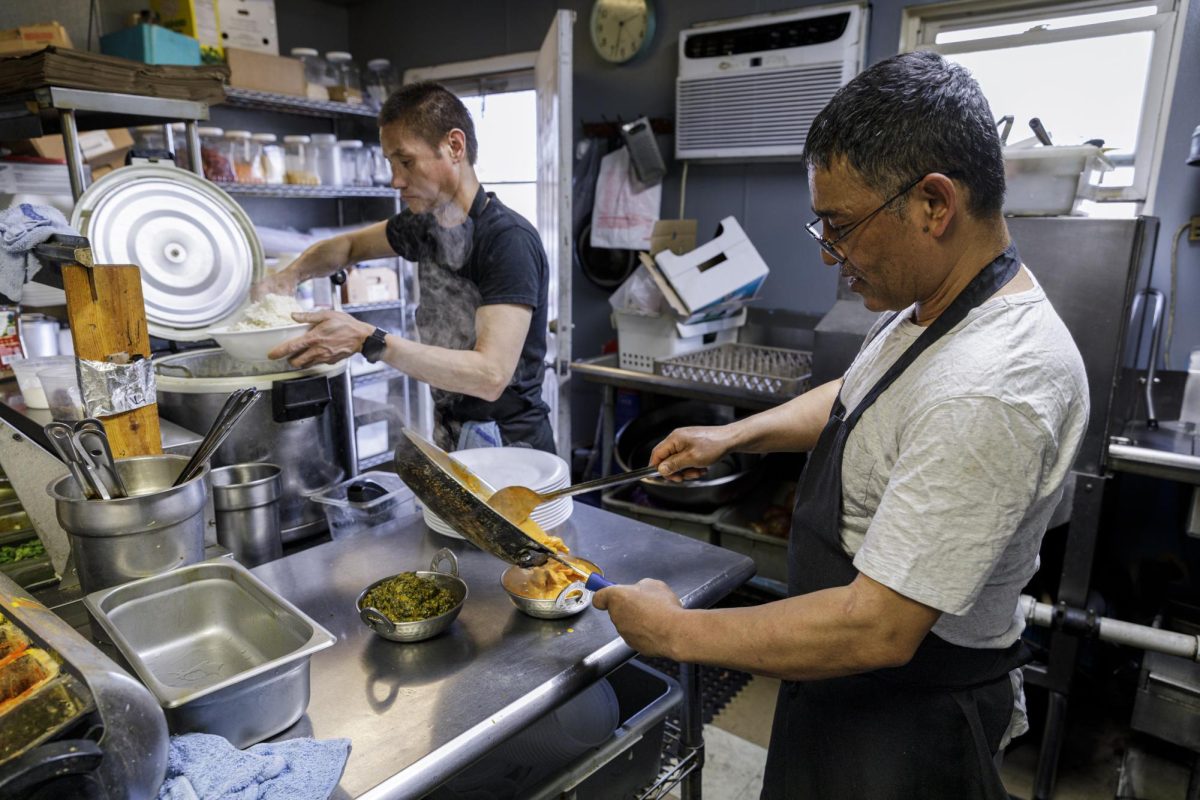
The Himalayas raised Narayan. They shaped his work ethic, his worldview and his understanding of people. Those lessons now live 7,500 miles away, in a small restaurant in Rapid City, South Dakota: Everest Cuisine.
 “Everest is the earliest Indian restaurant in Rapid City,” said Sapana Chettri, the restaurant’s manager since 2016. “At that time, there was no other Indian restaurant in Rapid City. People didn’t know what Indian food was.”
Chettri was born in Darjeeling, a city in north-eastern India, and immigrated to the United States in 2016. Before that, she studied mass communication, worked in print media, launched a sociopolitical magazine and ran a small publishing house in Siliguri.
Siliguri is also in north-eastern India, in the state of Bengal, at the foothills of the Himalayas. The city is a renowned gateway to the northeast, acting as a hub for tea, timber and tourism.
Chettri had stints as a manager at a computer institute and led an NGO that taught adult women literacy and life skills. While also serving as “Bal Vikas Guru” for the Sathya Sai organization, a teacher guiding children’s character and development. She spent her days writing and directing educational dramas for children, teaching values that academics don’t normally cover.
“I didn’t earn much there, but I loved the work,” Chettri said. “Since coming here, I’m truly happy doing this business.”
Everest was founded in 2010 by Dr. Ramesh Marahatta and Dr. Pushpa Poudel. Marahatta and Poudel are from Nepal and immigrated to South Dakota with student visas to attend college. The doctors had a business mindset, but lacked the culinary background and skillset to round out the business. The first year of development was focused on just that, research and development. Finding the correct vendors and crafting a first-of-its-kind menu proved difficult without a chef.
“So that’s why our chef, Narayan, was invited to settle in South Dakota,” Chettri said. “Now he is part-owner and founder of this restaurant.”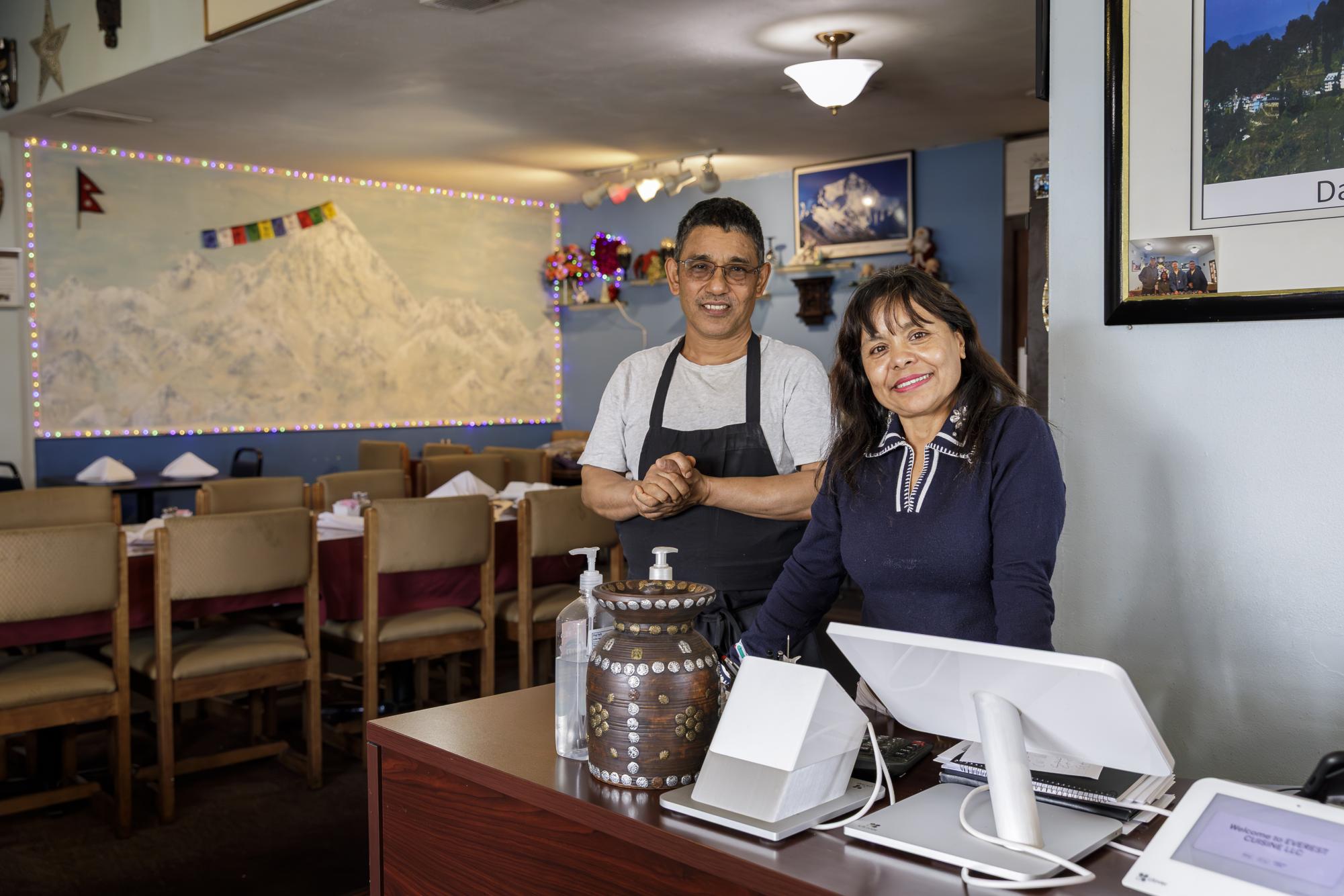
Narayan is from the Dolakha district in northeast Nepal, sandwiched between Mount Everest and Kathmandu. Dolakha is considered a relatively poor district with a high reliance on subsistence farming and a majority of households experiencing poverty. Being from a small village in the Himalayan regions of Nepal makes it difficult to find work. Narayan was no exception and made the journey to Kathmandu in 1990.
“I didn’t have a language, didn’t have any English. I didn’t have an education,” Narayan said. “I started as a porter, carrying around fifty kilograms the whole day for climbers.”
Carrying over 100 pounds day in and day out, up the tallest mountains in the world, is hard on the body. But Narayan was good at it and happy to have found purpose.
“After that, they saw, this guy is good, this guy is sincere, this guy is honest and humble,” Chettri said. “They promoted him to a cook and introduced him to the cook team.”
 Beginning a culinary journey on the rock faces of the Himalayas is not a traditional way of learning Nepalese cuisine. His kitchen wasn’t a restaurant. It was a tent pinned into ice at high altitude, where climbers from around the world gathered between ascents.
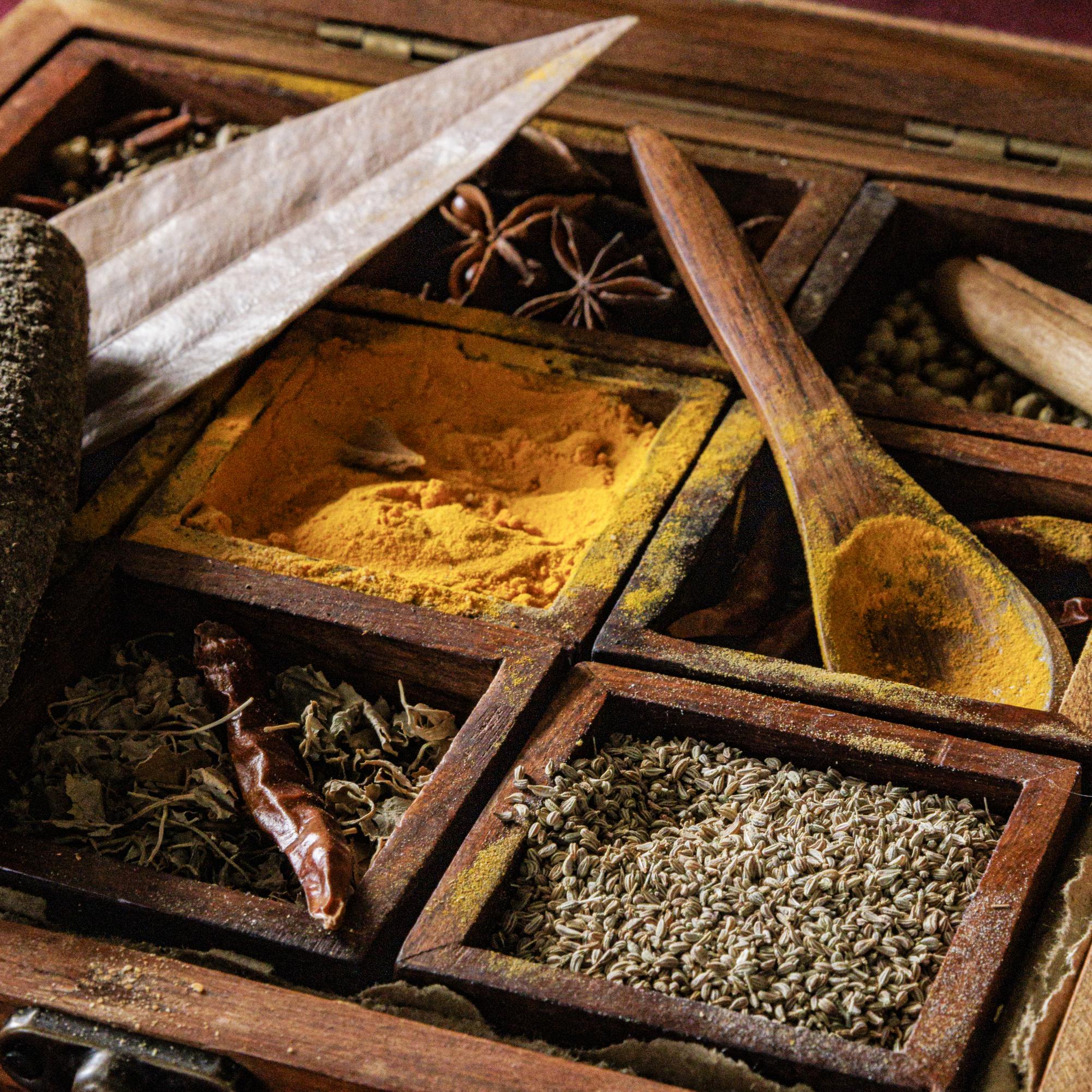
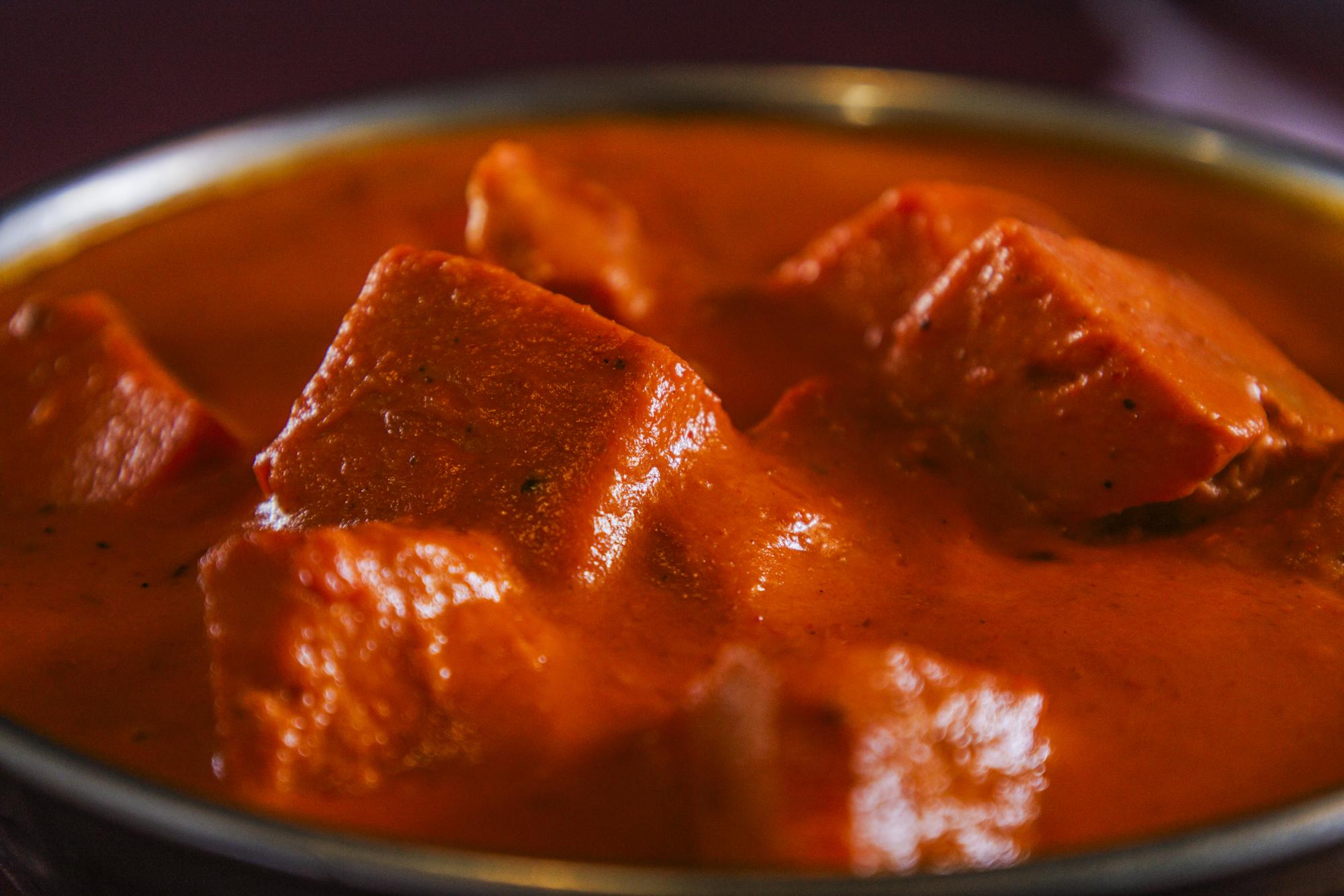
He learned to cook for them first, “white people food” – Western breakfast, cakes, comfort food for tourists unused to Nepalese flavors. His tent was treated like a luxurious hotel, and the food adhered to that. Then, gradually, he expanded into Indian and Nepalese cuisine.
“Basically, in India and Nepal, men don’t cook. Only the ladies cook,” Chettri said. “So if a man likes to cook, you have to go to school.”
Culinary school wasn’t possible for Narayan, though. Instead, he learned from his teacher and through experience.
“I worked with Korean people, American people, Japanese people,” Narayan said. “Czech, Spanish, Yugoslavian. In my tent, I ask them to take a seat.”
Inside that tent, the mountainous landscape shifted from the brutal cold and wind of one of the most inhospitable places on earth – it was warm, loud and alive. People from different countries, religions and languages sat shoulder to shoulder, sharing food and stories. Borders blurred on the edge of two countries.
What mattered wasn’t where you were from, but how fast you ate, how hard you laughed and how long you stayed. Everyone was happy and glued together by the comfort of food.
That feeling of warmth in a harsh place, and connection across difference became the foundation of Everest Cuisine.
“South Dakota is a different part of the United States,” Chettri said. “It’s not California, it’s not L.A. or New York. They see a lot of people, a mix of diversity, but this area is kind of a white ocean.”
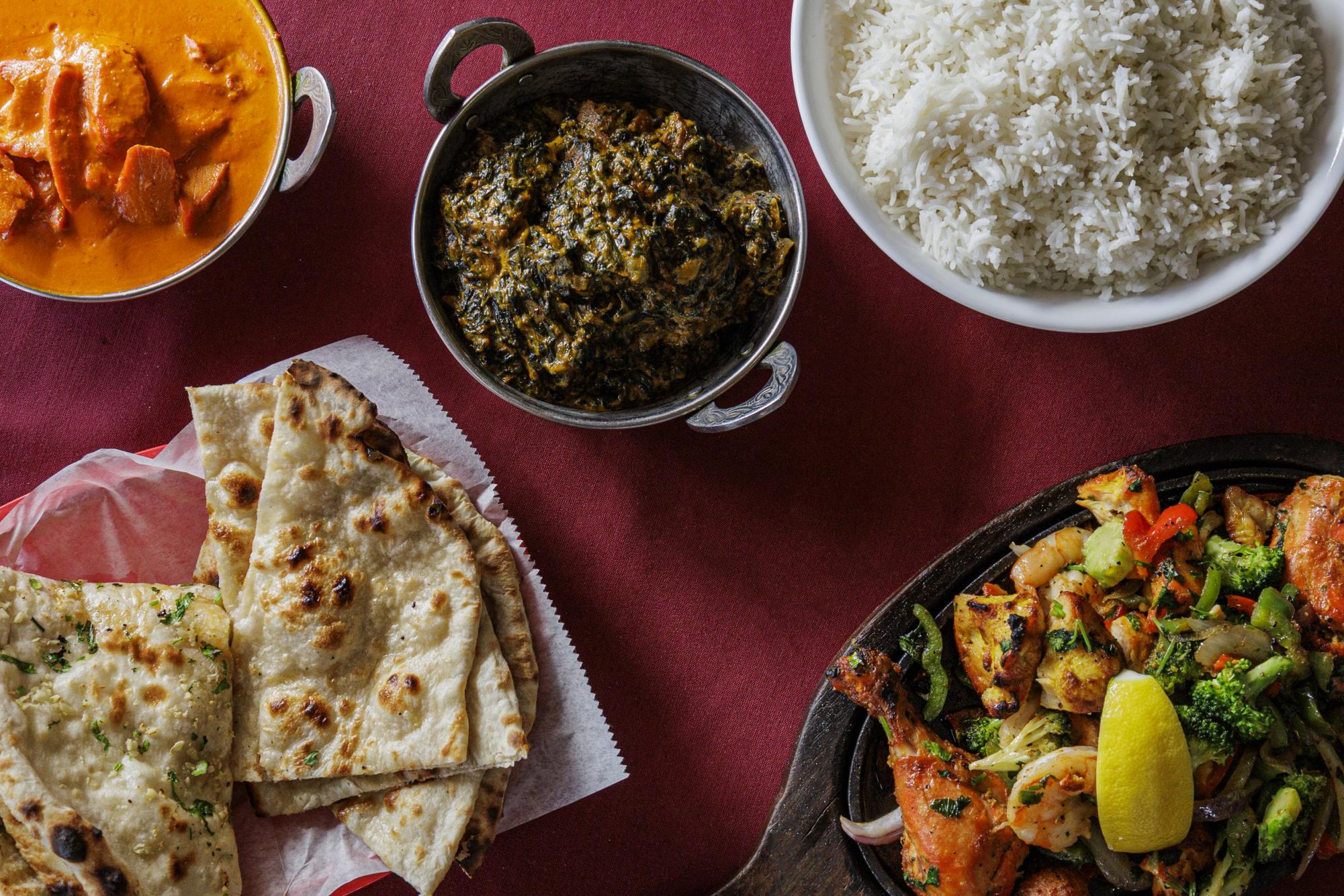 After Everest was established, customers flocked to get a taste, along with a never-ending stream of working hands from India or Nepal.
“Indian, South Asian people don’t like to come here,” Chettri said. “We hire lots of people like that, but they only stay for six months. We try to hire local kids, but American people in general just don’t like to work.”
The emigrants who started at Everest and discovered a love for the Black Hills moved on to bigger things. Many previous chefs, managers and dishwashers started their own Indian-Nepalese restaurants in and around Rapid City.
“It’s not like business was slow or they didn’t like working here. Rapid City is growing fast,” Chettri said. “We serve from the heart; it’s totally a mom-and-pop kitchen. We’re not going to lose our small penny. I like healthy competition.”
Everest, among the now numerous other Nepalese restaurants in Rapid City, it has never lost its charm. The walls shift between shades of blue, morphing into murals that provide a canvas for a scrapbook of photos, newspaper articles and relics from Nepal and India. The area is small, intimate and tucked away next to a cafe serving the same food Narayan first learned how to cook. Across the street are Taco Bell and McDonald’s, the epitome of American consumerism and the exact opposite of what Everest Cuisine stands for. It feels less like a business and more like a memory.
“As a business owner, we like to expand to one, two, three or four more businesses,” Chettri said. “But, we don’t want a luxurious life. I’m not going to lay down and have someone feed me grapes because I’m okay with struggling and struggling.”
Those struggles are only compounded in contemporary America, where supply chain disruptions, tariffs and immigration crackdowns have tightened the margins for small businesses. Month after month, the cost of spices and food climbs higher, while an unrelenting demand for kitchen help slowly slips beyond reach. Everest remains, though, a place that still offers a shift of scenery and taste.
“The food cost is up almost fifty percent, it’s a lot,” Narayan said. “It’s hard to keep up.”
But the strain is not new; it has simply taken a different form. Long before rising costs and staffing shortages in Rapid City, Narayan faced a different kind of pressure altogether.
“In 2002, seven Russian climbers came to Nepal to summit some peaks,” Narayan said. “Mount Everest, then Makalu and Kalu. They summited Makalu, 8000 meters up, and came back down to the basecamp. A helicopter was waiting for them at the basecamp.”
The helicopter picked up all the Russians and had room for some Nepalese locals. Narayan’s friend made it on the helicopter, Narayan did not, and began his journey back to Kathmandu on foot. The trek back to civilization was long and demanding, and upon return, he looked for his friend.
“The helicopter was missing,” Narayan said. “The Russians, the Nepalese, all died. Their bodies were never found.”
A few months after Carr passed away on Mount Cho Oyu, Narayan retrieved his body. Family members of Carr invited Narayan and the other sherpas to visit his hometown in Australia.
“The police department treated us very good,” Narayan said. “Like drinks, food, girls, everything. They asked if we needed anything else. We told them no, we are good. We see everything now, no more demand.”
The people of Melbourne extended the same respect Narayan gave to everyone he assisted up the faces of the Himalayas, the same he gave to every person who wandered into his tent for a warm meal and good company. The respect he encountered there is what he and Chettri try to recreate every day in Rapid City.
“The prime minister, chief commissioner, everybody was at our welcoming dinner,” Narayan said. “That trip to Australia was remarkable, and it was the first time I’ve seen the ocean.”
In a small dining room, far from the Himalayas, they built something familiar. Warmth in a harsh place, connection across differences and a place where anyone can sit.