
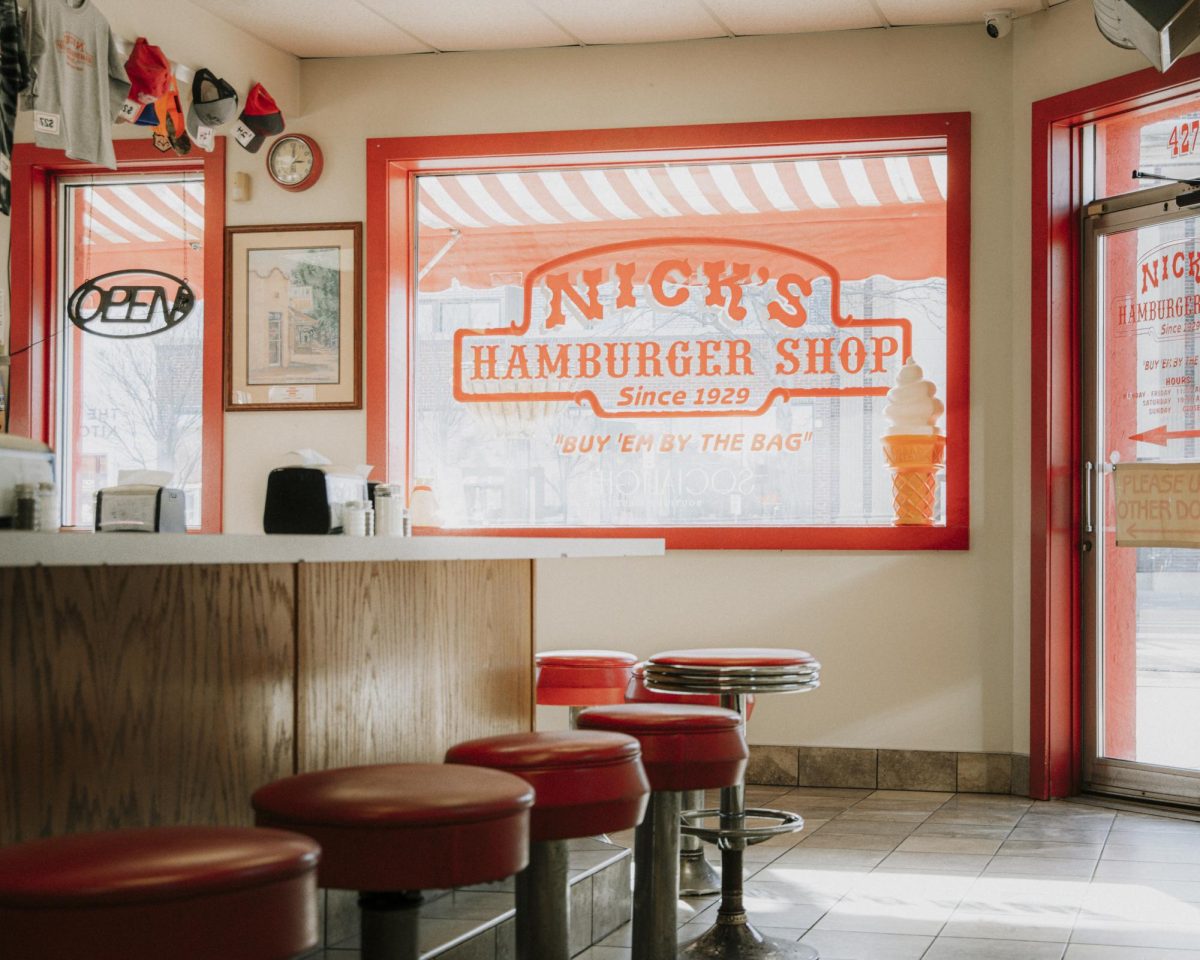
In 1929, Gladys and Harold Nikalson moved from Spencer, Iowa, to Brookings, South Dakota, where they began to make what would, arguably, become the most famous burgers in South Dakota. At a starting price of five cents per burger and with the “Dirty Thirties” ahead of them, the Nikalsons needed to create an icon to survive.
The Nikalsons opened Nick’s Hamburger Shop Nov. 2, 1929, located on 5th Street in downtown Brookings. A year and a half later, they moved to the corner of 5th Street and Main Avenue, where they shared the building with a barbershop, leaving only 14 counter seats for the growing restaurant.
Though the seating was limited and the Great Depression and WWII took a toll on the country, Nick’s came out the other side on top.
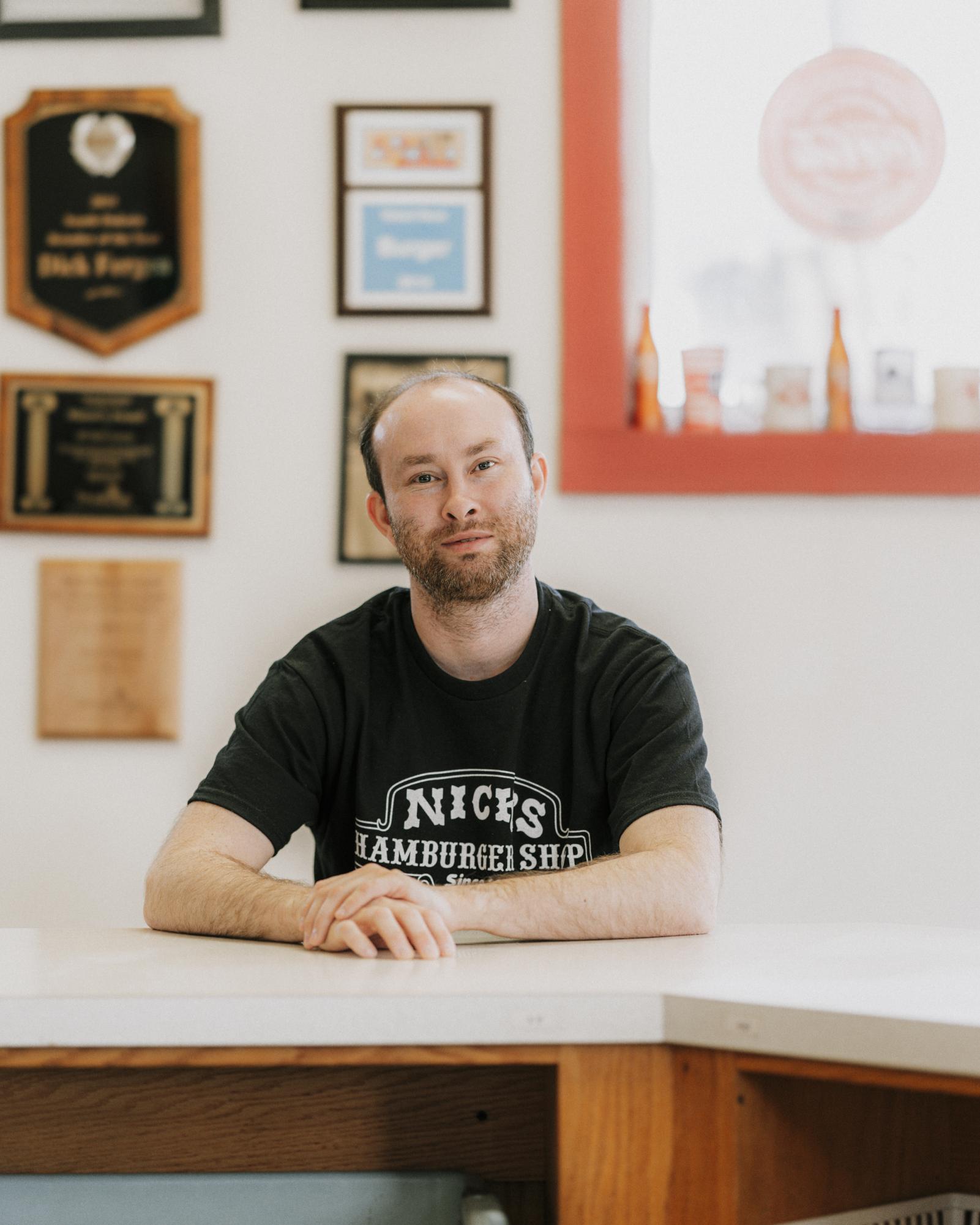
After Harold Jr. came back from WWII, he took over the helm in 1947 and pioneered a new era at Nick’s. On Oct. 18 of the same year, Nick’s had the busiest day in the shop’s standing history, selling 4,450 burgers.
This marks the true beginning of Nick’s becoming a Brookings community staple with a large cult following. A backbone of the community, people have congregated at the restaurant for South Dakota State University games and other town events. The shop has even hosted several weddings.
Nick’s also hosts some odd traditions, including a burger-eating challenge, in which the record holder, Karen Meyer, ate 37 burgers in one sitting, and a high school student who comes in frequently, always wearing a suit, and always ordering a piece of pie.
“We have one guy. He’s just got himself on hospice because he says, ‘I’m ready to go,’ but he’s ninety-four, and he’s been eating here since he was two,” said Justin Price, current owner and operator of Nick’s Hamburger Shop. “So he’s literally been here the entire time. [His son] tried to get him to eat a Nick Burger, and he’s like, ‘I love those. And I just had it last week, but I’m starving myself so I can die, leave me alone.’ And that’s one of the things that’s like, [Nick’s] is almost a religion.”
This “religious” following has expanded outside of Brookings, and even beyond South Dakota over its nearly century of operation, enthralling tourists from all over the world, who have marked their countries of origin with pins on a map displayed in the dining room. These pins are gathered in places as far away as Jordan, Brazil and Japan.
“We have people all over who send us postcards and stuff when they wear their Nick’s shirts,” Price said. “Someone told me that on one of the Turks and Caicos Islands, someone has a Nick’s shirt up in the rafters, and it’s been signed by people who have been to Nick’s.”
The restaurant has also experienced coverage from news sources such as The Washington Post, South Dakota Public Broadcasting and multiple other large companies.
In 1975, Duane Larson, a Brookings local, took over the shop when Harold Jr. decided it was time to retire, and his bold personality found a place defending the traditions of Nick’s.
“Back when I first started eating here, Duane was the owner,”
Price said. “And, you know, Duane was Duane.”
Larson was known for his strong opinions about the quality of the products he was selling in Nick’s, so much so that he was featured in The New York Times for pouring out soda on the sidewalk in protest of Coca-Cola’s 1985 attempt at “New Coke.”
“Do things go better with the new Coke? Not to Duane Larson, who owns Nick’s Hamburger Shop in Brookings, S.D.,” said James Barron, in his article, “FANS OF OLD COKE SAY THE NEW IS NOT IT.” “‘I don’t think it’s very compatible with food,’ [Larson] said… Nick’s has sold Coca-Cola ever since it opened in 1929, but last week Mr. Larson switched to Pepsi. ‘We let people sample the new Coke,’ he said. ‘Everyone preferred the old Coke.’’’
Larson isn’t the only owner who made large steps towards improvement, advocacy and growth for the local staple.
On Aug. 1, 2004, Dick Fergen, owner of Fergen’s Clothing and Shoes, bought Nick’s Hamburger Shop and the barbershop next door to expand the seating up to a total of 28 counter seats that now surround the entirety of the grill stations, giving customers a full view of how their food is made.
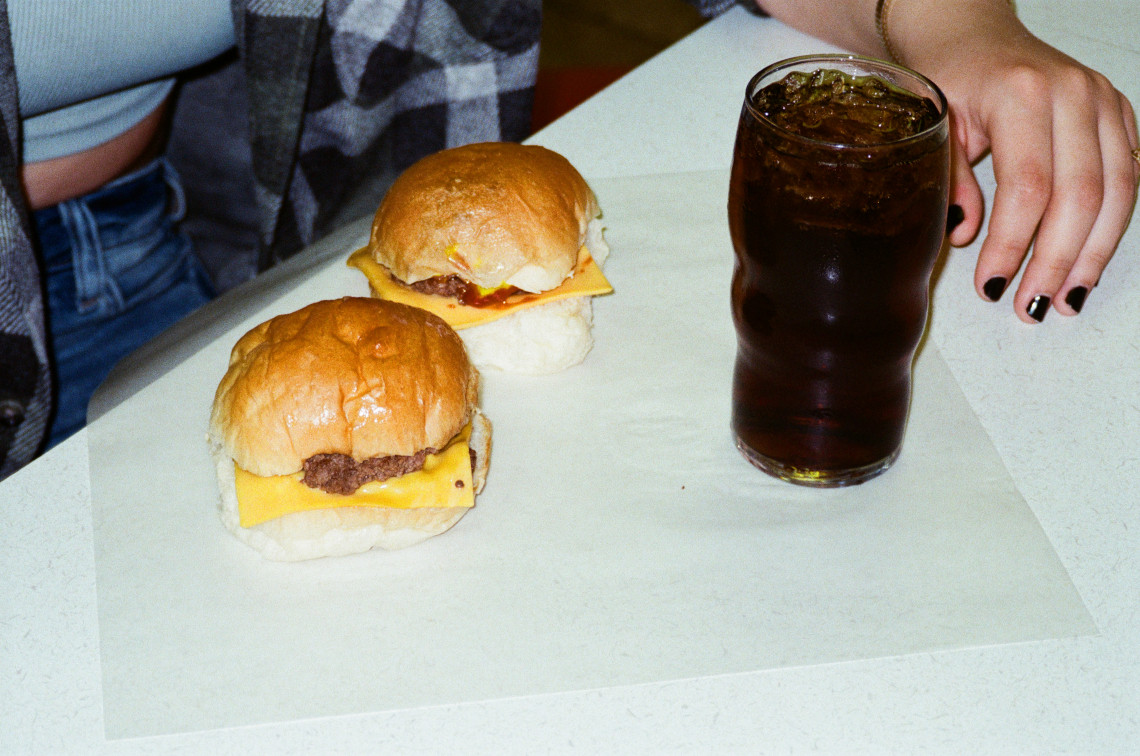
Specifically, the expansion of the counter allowed customers to observe Nick’s method of tank frying their burgers in rendered animal fat, a technique used since opening day. Another thing that remained consistent since the beginning is the owners’ insistence on high-quality, consistent ingredients, including the same brand of chips, Old Dutch, fresh buns from the Brookings Bakery, made with no preservatives and even their secret relish recipe has remained the same over the decades.
“I can’t even tell you how long we’ve been using [Old Dutch chips] because whenever I was a kid, those are the exact same size,” Price said. “They actually say that you can’t get these size bags, they’re only made for Nick’s. I don’t know if that’s entirely true… but that’s what the salesman always says to make me feel guilty because I think he wants me to use bigger ones.”
Price recognizes the importance of Nick’s in the community. He harbors his own sense of childhood nostalgia for the shop and has grown up in its community.
“Nick’s was kind of always the place where my grandma would [say], ‘Hey, you want to go to Nick’s?’ Absolutely, every time,” Price said. “[I] never would have imagined that I would be in here as the owner, being as that I was a little kid eating in here probably when I was like five years old.”
Price took over Nick’s July 31, 2025. His main goal as the new owner is preservation.
“There’s a perception, after every owner has taken over, that there’s some change,” Price said. “And that’s the hardest part with Nick’s… We get our buns made every day from [the] local bakery… we use the same ground beef… we make our own oil… we make our own relish… we haven’t changed anything. We don’t plan on making any changes. And it’s worked for ninety-six years exactly this way. At the end of the day, people come here for the burger. They like the experience, and they like what they get.”
Many patrons of Nick’s are protective of the traditional processes, and they are not afraid to speak out about their love for the restaurant and its preservation. They can even be stern with newcomers about the insistence of adding fries to the menu, or how many tourists and young customers get cheese on their burgers.
“You know, cheese didn’t come until [1974], and so you get the older people that say, ‘No, they shouldn’t have cheese,’” Price said. “Nowadays in America, you look at a cheeseburger, you’re like, ‘Yeah, that’s what everyone wants,’ but here the old people are offended when you put cheese on it. Then new people always bring up the fries thing, and it’s never going to happen.”
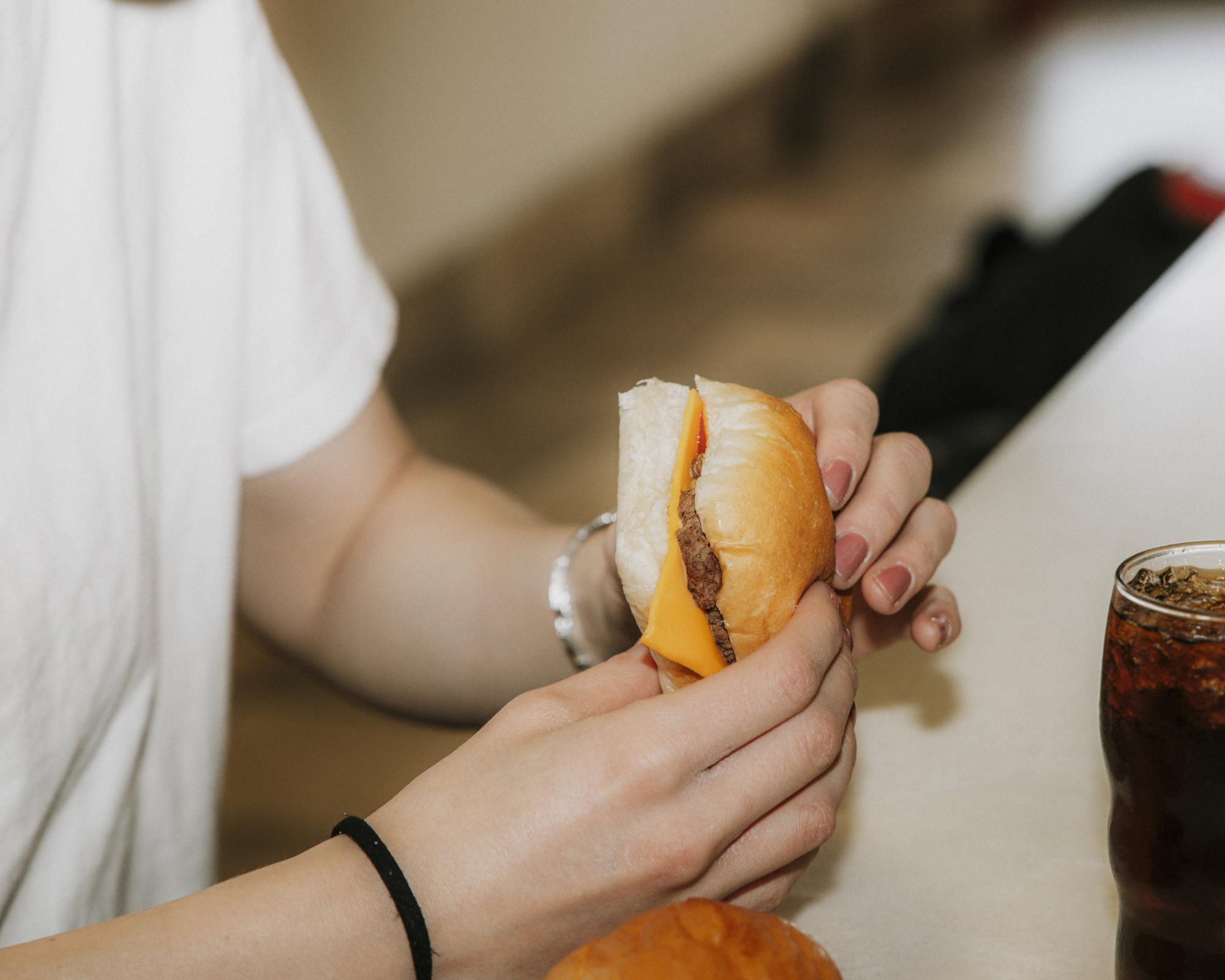
Now, to add cheese to a Nick Burger, it’s an extra 69 cents, on top of the time-inflated $2.98 single patty burger. But when cheese was first introduced to the shop, it was only an extra 5-10 cents to their 35-cent burger in 1974.
It’s not only the customers that are particular about changes to their processes, though. Price likes to engage with customers, and sees it almost as a duty to be able to sit with his patrons and regale the story of Nick’s.
“Bridget, my manager, gets to be the head cook, mainly,” Price said. “She likes that role because she doesn’t want to go and explain the story of Nick’s five hundred times a day. A lot of customers come in here, and that’s what they want to hear… And so that’s what we give them… [the story] seems simple on the surface, but there’s a lot to it.”
Nick’s story extends into their aesthetics as a company as well, and for as long as they have been around, they have prioritized recognizability and character.
“Simplicity works,” Price said. “We live in a time now where it’s so hard to be simple. It’s overdone. We know [Nickburgers are] not that aesthetically pleasing. It’s really hard to take a picture of it, very hard. Everyone knows what that is. But if you’re a new person, and you see that, you’re like, ‘I don’t want that, that’s not what I’m looking for.’ And then they try it, and they’re hooked.”
Nick’s 100th anniversary is coming up in 2029, and this only proves what Price believes. In an age where most things are overcomplicated, overstylized and marketable to an extreme, maybe Nick’s has survived because it hosts exactly what some of the population needs right now. Simple food, simple places and simple kindness.