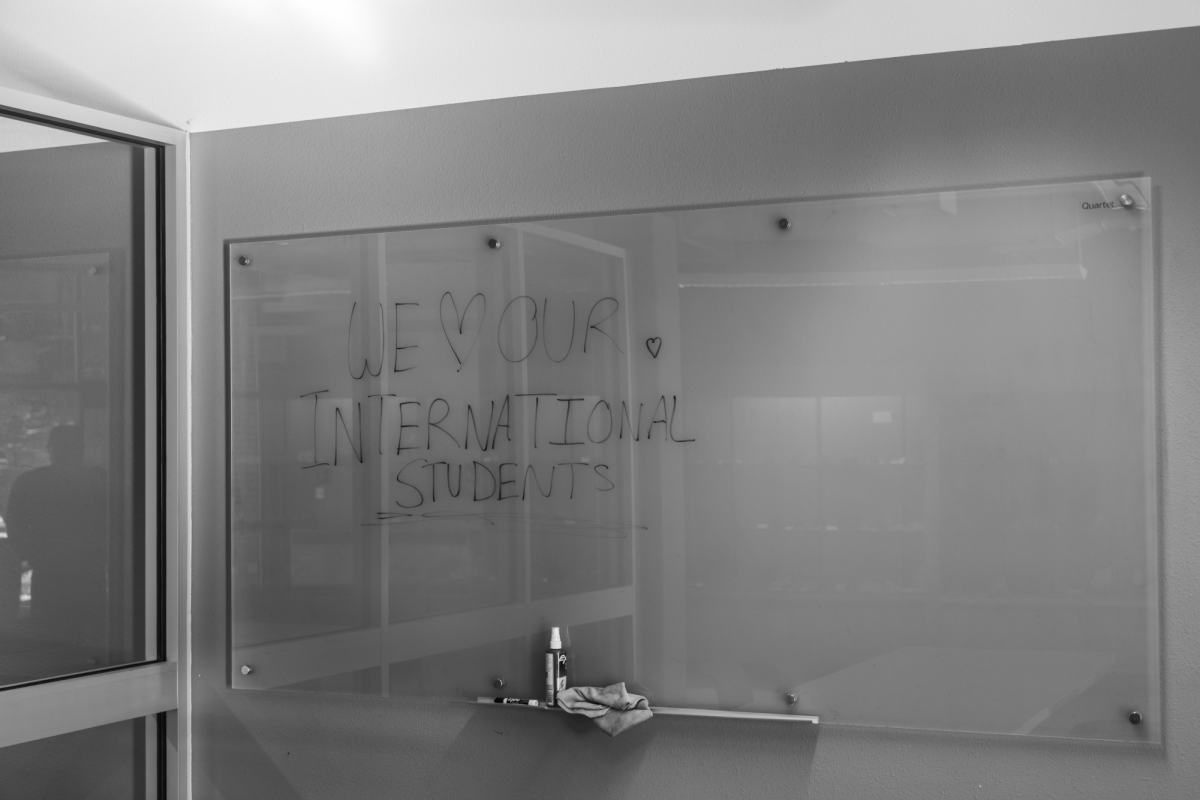
Immigration and Customs Enforcement (ICE) was on the Black Hills State University (BHSU) Spearfish campus on Feb. 18, 2026. Students and faculty were made aware of the ICE presence through a campus update sent to faculty, staff and students on the morning of Feb. 10. The update stated ICE will be conducting an annual routine audit of international student records as part of BHSU’s federal compliance process.
“The visit is a routine, scheduled compliance check that occurs periodically, usually once every semester,” said Kaitlin Palmer, director of international relations and global engagement. “These reviews are a normal part of the university’s participation in the federal Student and Exchange Visitor Program (SEVP).”
The ICE official reviews documentation in the Student and Exchange Visitor Program (SEVIS) system to ensure the records are accurate and consistent with federal regulations. If discrepancies are identified, they are addressed through clarification or updated procedures rather than punitive action.
“I think it’s very wrong because [BHSU Administration has] seen how much more violent ICE has been getting throughout the last months,” said Kylee Wallette, a first-year student at BHSU.
This audit comes during a time of nationwide crackdowns by ICE and the Department of Homeland Security (DHS). The widespread enforcement has resulted in the deportation of over 675,000 immigrants and detention of 75,000, according to the DHS website and the American Immigration Council. 32 people have died in ICE custody in 2025, the highest in over two decades, according to The Guardian.
“The official purpose is limited to compliance review and a regulatory guidance meeting,” Palmer said. “They are not present to patrol campus or interact broadly with students, faculty, staff or the wider community. These visits are conducted by unarmed program officials.”
One order signed among the slew of executive orders by the Trump administration, mere hours after inauguration on Jan. 20, 2025, was one reversing prior federal guidance of ICE conducting enforcement actions at sensitive locations. The policy change allows agents to now operate at schools, hospitals and places of worship, rescinding a 2021 policy protecting these locations.
“I didn’t feel comfortable enough going to school since I’m not white and didn’t feel comfortable enough being around them and decided to just stay inside,” Wallette said.
ICE agents still need authorization from school officials or a judicial warrant to enter private spaces.
“I understand why the broader national conversation around immigration can influence how situations like this feel for students,” Palmer said. “This visit was consistent with prior routine compliance reviews. My decision to begin notifying the campus community about these visits over the past two semesters was intended to increase transparency and provide advanced awareness, not because the nature of the visits have changed.”
New regulations concerning international students are expected to be published next month. DHS proposed a new rule Oct. 28, 2025. The rule would amend regulations by changing the admission period in the F (academic student), J (exchange visitor) and I (representatives of foreign information media) classifications from duration of status to admission for a fixed time period.
“If the new rule is similar to the proposal, it could mean students are given a fixed time period to complete their degree,” Palmer said. “Some situations, like needing an extra semester or changing academic plans, might require additional applications with the government.”
Palmer originally requested that her comments be off the record, stating she needed approval from BHSU Marketing and Communications to discuss sensitive topics. The quotes in this article are through email correspondence with Palmer after she was granted approval to discuss the issue by BHSU Marketing.
“Because it’s a sensitive topic, and there’s something they’re [faculty] not sure about, they just want to talk through talking points with [marketing and communications],” said Becca Walters, senior director of marketing and communications. “I know Jane Klug wanted to speak with you, too. We sent her talking points that you and Kaitlin Palmer already discussed too.”
Jane Klug, Dean of Students at BHSU, was scheduled for an interview, but cancelled after not receiving a list of questions before an in-person interview. The Jacket Journal often does not share questions with potential sources prior to a formal interview, as it can defeat the purpose of the interview and has the potential to weaken the experiential learning element for students involved in BHSU student media.
“Unfortunately, I do not have a lot of information for you regarding the topic you are researching,” Klug said via email. “What I know is there was an annual review to ensure that we are maintaining our SEVIS records correctly.”
The fact that some members of the administration or staff and faculty are encouraged to seek approval from marketing and communications raises concerns of potential First Amendment violations.
First, faculty gag orders, or a requirement to seek permission from administrators or marketing offices prior to discussing relevant campus issues with members of the media, have previously been struck down as unconstitutional by the U.S. Supreme Court (Keyishian v. Board of Regents (1967)). In politically divisive eras, however, instituting gag orders or restricting contact with members of the media is a common form of prior restraint exercised by university administrators.
“If there’s something [faculty] are worried about and they don’t want to say the wrong thing or like, if the president reads this he’s going to be upset,” Walters said. “There are directives from the Board of Regents, like, don’t speak out about a political party, don’t take a stance on a bill, those kinds of things.”