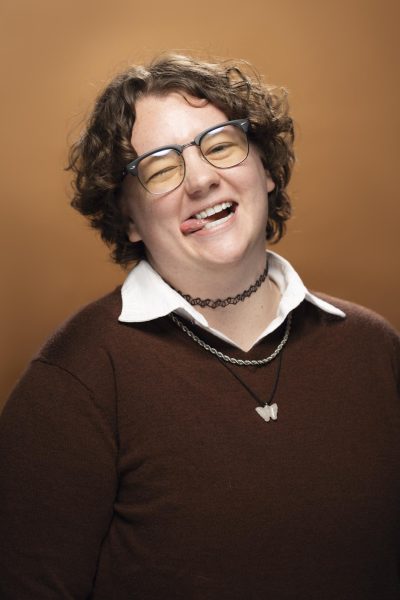

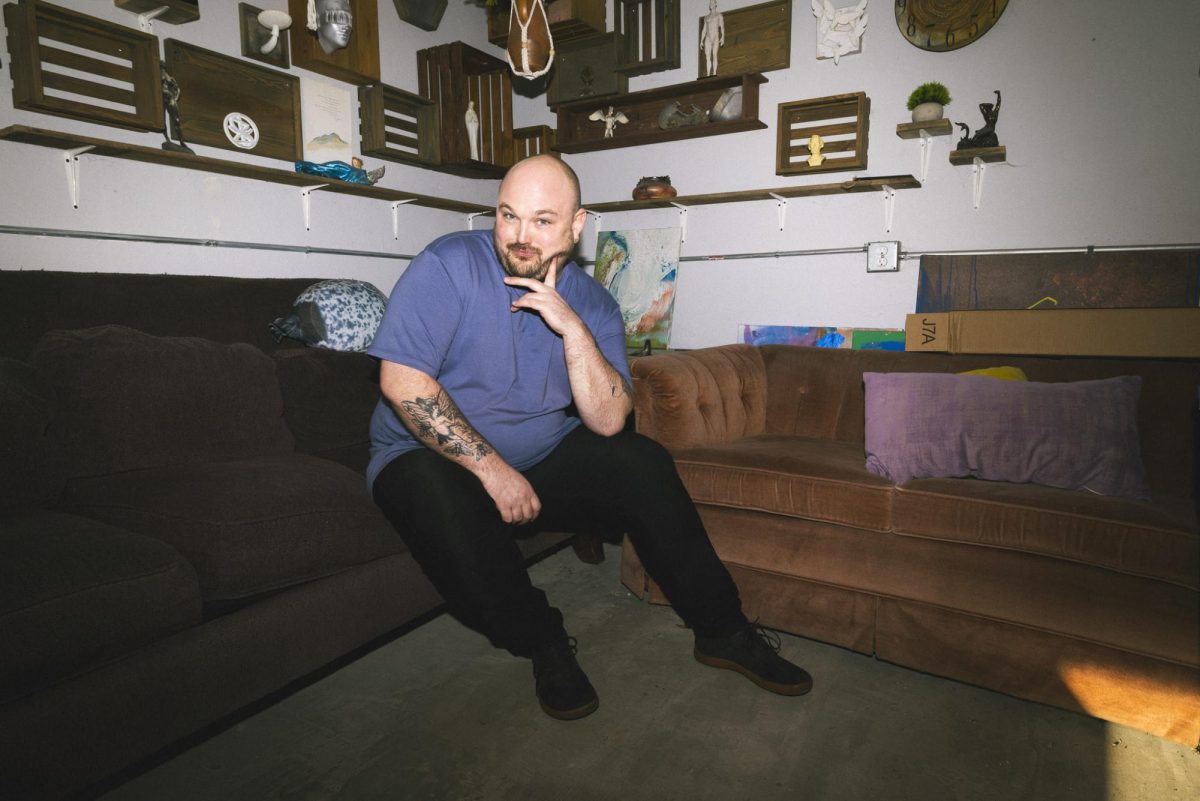
Predisposed to physical creativity as the son of an art teacher and carpenter, Cameron Stalheim was destined for a career in art from an early age. Sculpture has always been at the forefront of his artistic interest.
In many ways, Stalheim has been working towards his latest show, “LORE”, currently on display in Sioux Falls, South Dakota, at the Washington Pavilion of Arts and Science, his whole life.
He first earned a Bachelor of Fine Arts degree from the University of South Dakota and then went on to complete a Master of Fine Arts program from the Maryland Institute College of Art. Upon execution of his thesis, a sculpture of a gay porn star as a giant merman, Stalheim moved back to his home state of South Dakota.
Why? For Jesus, of course.
“I’m not religious but…I got a big commision to make a really hot Jesus,” Stalheim said. “It was a good opportunity to come back home, you know, make my mark.”
Sioux Falls is a city with strong traditional roots, a remarkably consistent voting history and very high conservative, Christian, heterosexual, caucasian, cisgender populations. So naturally, a queer artist who specializes in the human figure may encounter some hurdles.
“It’s one of those things,” Stalheim said. “Is this really feasible to do in South Dakota?”
The answer for Stalheim was yes. He noticed growth in the area in recent years as well as the expanding art scene and increasing cultural diversity. He held fast to his decision, even though he has missed out on larger opportunities that would have possibly be presented to him if he lived in a larger city.
“I feel like so many of the changes and the political tensions we’re seeing right now are backwards,” said Sierra Young, queer artist and South Dakota native. “And we need revolution. And art and people and community are the only [things] that are going to get us there.”
Aside from art, there are non-career-related reasons Stalheim chose to move back to Sioux Falls. It doesn’t hurt to have a lower cost of living and to be near loved ones, but Stalheim also wanted to be a part of the blossoming art culture in his hometown, and thus far, his hometown has had his back. Since moving home, Stalheim has had consistent commission requests for his work, providing opportunities to continue to hone his craft and he’s still having a good time while doing it.
“I’m still finding the joy and the fun… I still get to rediscover myself. That’s one thing that’s kept me going is [this] discovery of self that keeps emerging every time I do a show or a sculpture,” Stalheim said.
The combination of fantastical characteristics and realistic human figure work serves as an excellent vessel to explore feelings of otherworldliness while still managing to stay grounded in reality and maintain accessibility for the average audience member. Fairies and mermaids are widely known, instantly recognizable mythological creatures that still have a mostly human body, with just a touch of ethereal sparkle.
There is an element of escapism in all works of art. Allowing the viewer to get drawn in by the work, captivating them so completely that they may momentarily forget the real world around them.
Next comes the fall back down to reality. The viewer is reminded of something from their own lived experience, and they begin ascribing the art meaning, emotion or logic. In visual art media, this all happens in a matter of moments. Stalheim, a self-admitted toucher of all art, has found that sculpture work tethers the art to the viewer the most tangibly.
“I like that [a sculpture] takes up space, it takes up your reality more… It takes up part of you and you take up part of the work,” Stalheim said.
With the viewer and the art in the same space, one can guess at the meaning of the work, but how is the artist meant to convey that meaning to everyone?
Countless variables, including personal histories, cultural backgrounds, different media exposure and countless different first impressions all have to be contended with. There’s a simplicity in works involving the human figure in this way. It’s one of the few things that every single person on the planet can relate to because we all have a body.
We can toil over the differences in body shape, size, texture, color and worth for ages – and we have done so for much of human history. But at the end of the day, we still know what the human body looks like, and we’re all largely familiar with the additions presented in Stalheim’s work.
We understand without needing to be told that humans aren’t actually four inches tall and don’t come in a veritable rainbow of colors, but that these figures, who Stalheim colloquially refers to as his “boyfriends,” represent a repetition of the self and the shared humanity of everyone regardless of physical differences.
We’re all essentially the same: human. In order to push the viewer just that bit further, Stalheim implements fantastical elements in his work, playing with concepts that can be more explicitly expressed when he has the benefit of bending reality to his will.
“It’s seeing yourself in a fantasy creature. It’s seeing yourself in something that is extremely well done and colorful and unique,” Young said. “I mean, I am identifying with a blue mermaid with a seven-foot tail and floating hair because I also have rolls and squishy softness and that’s awesome.”
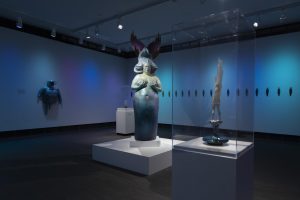
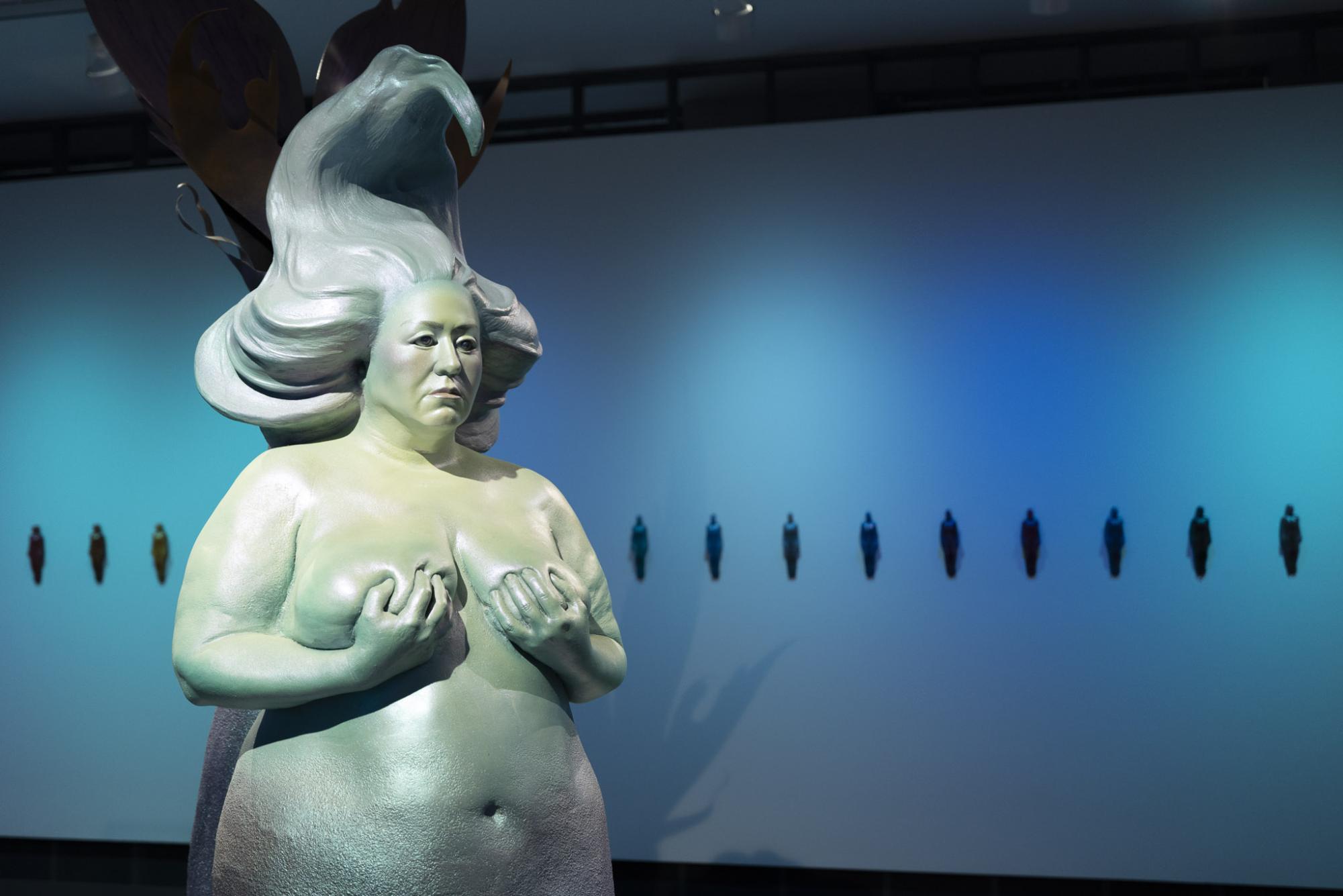
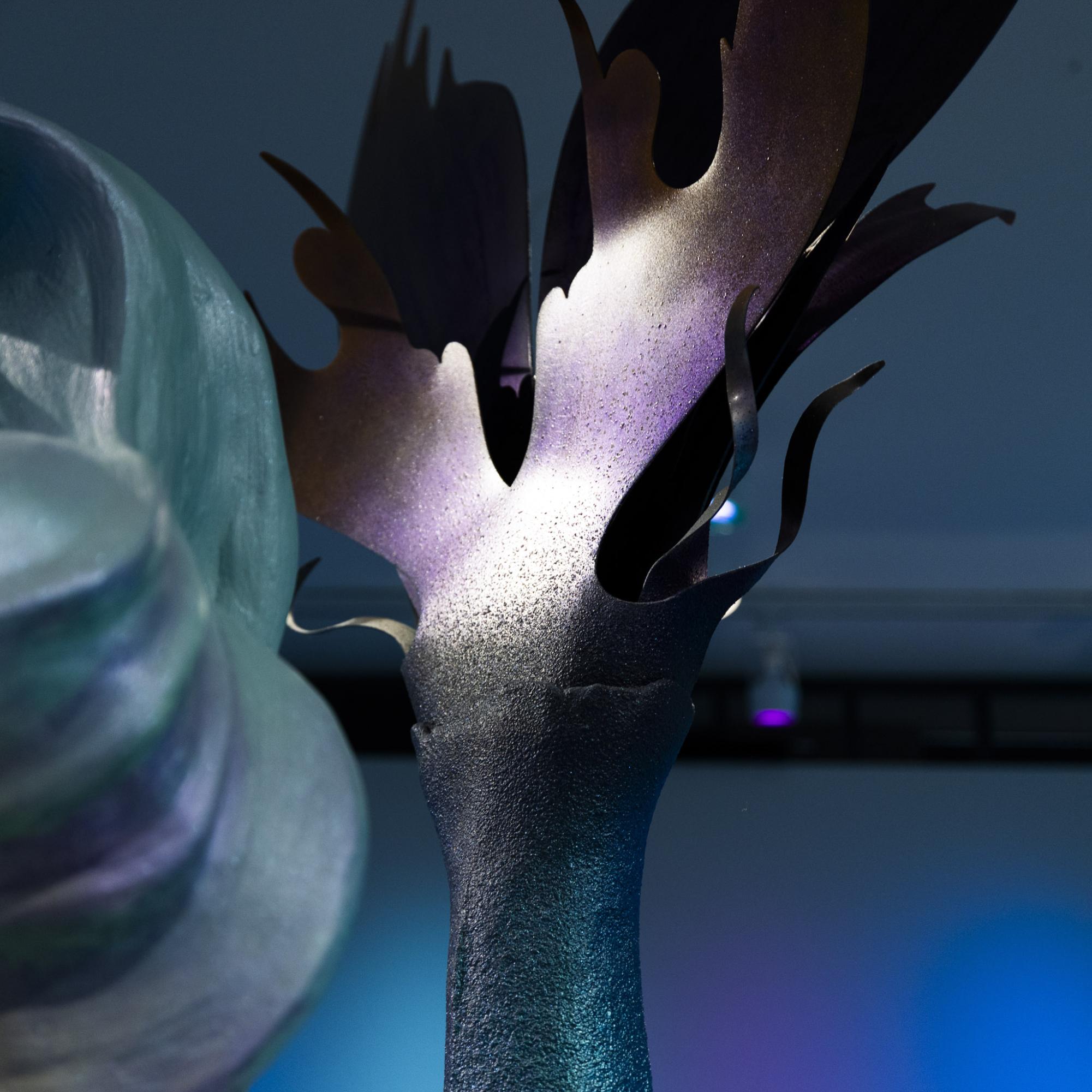
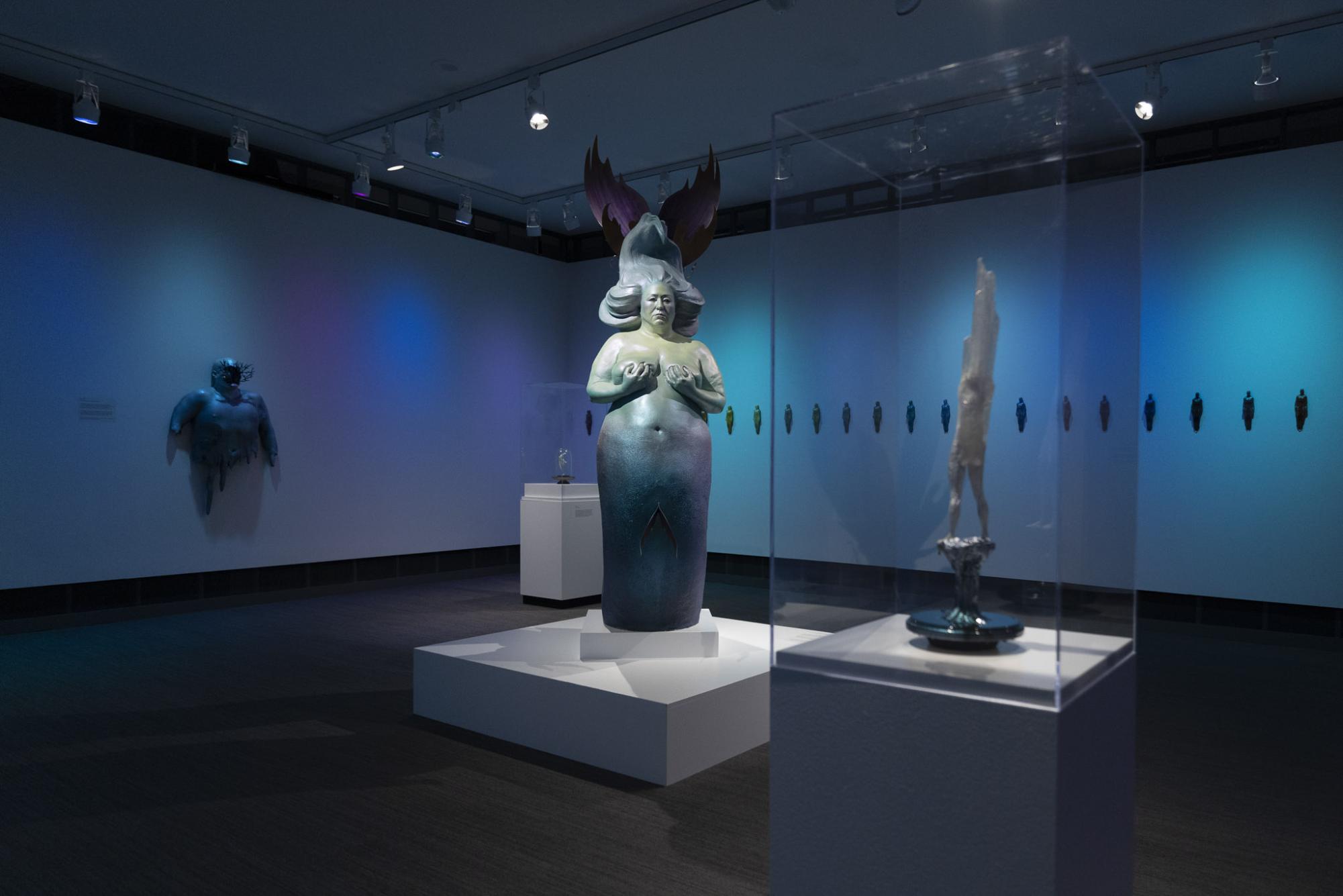
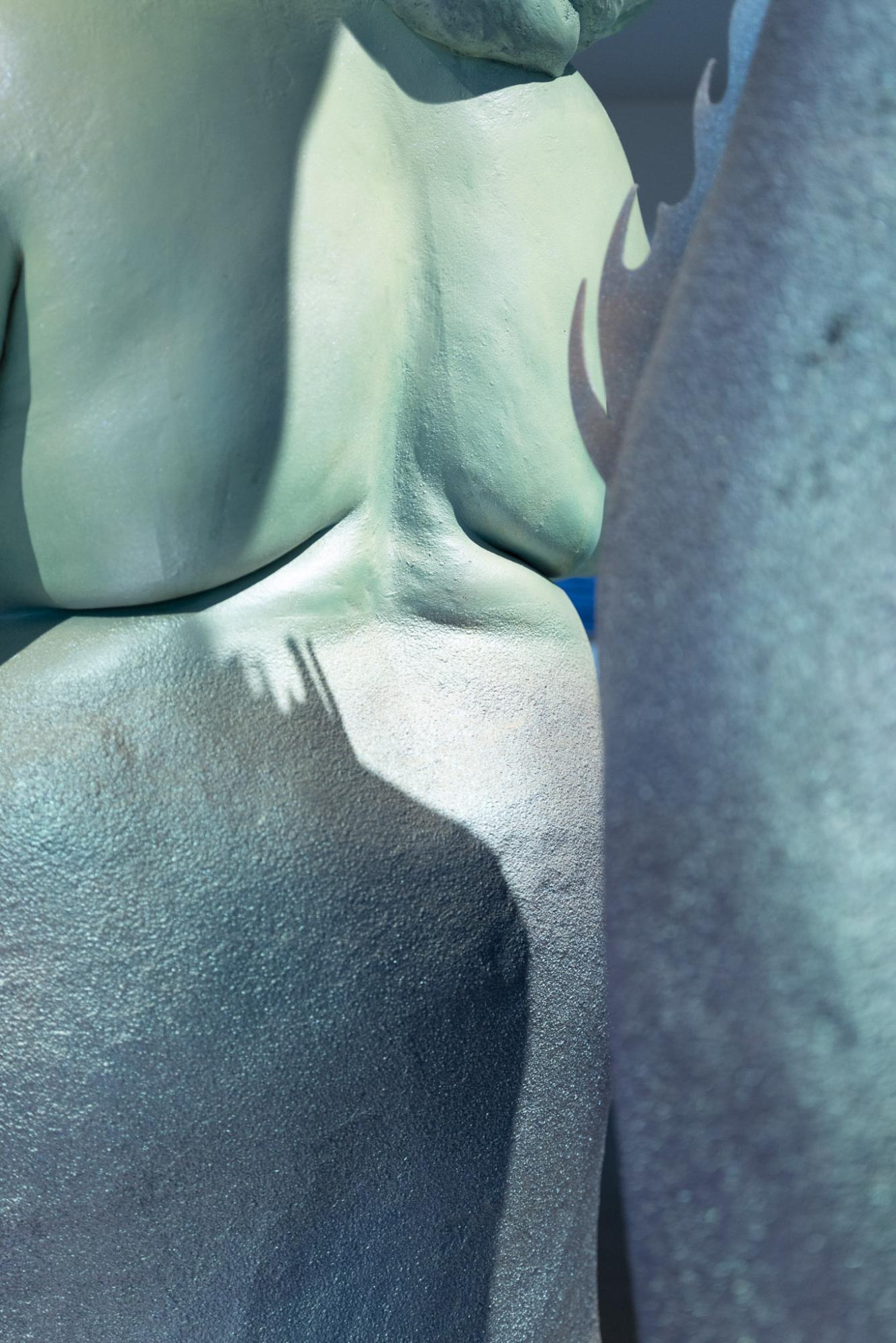
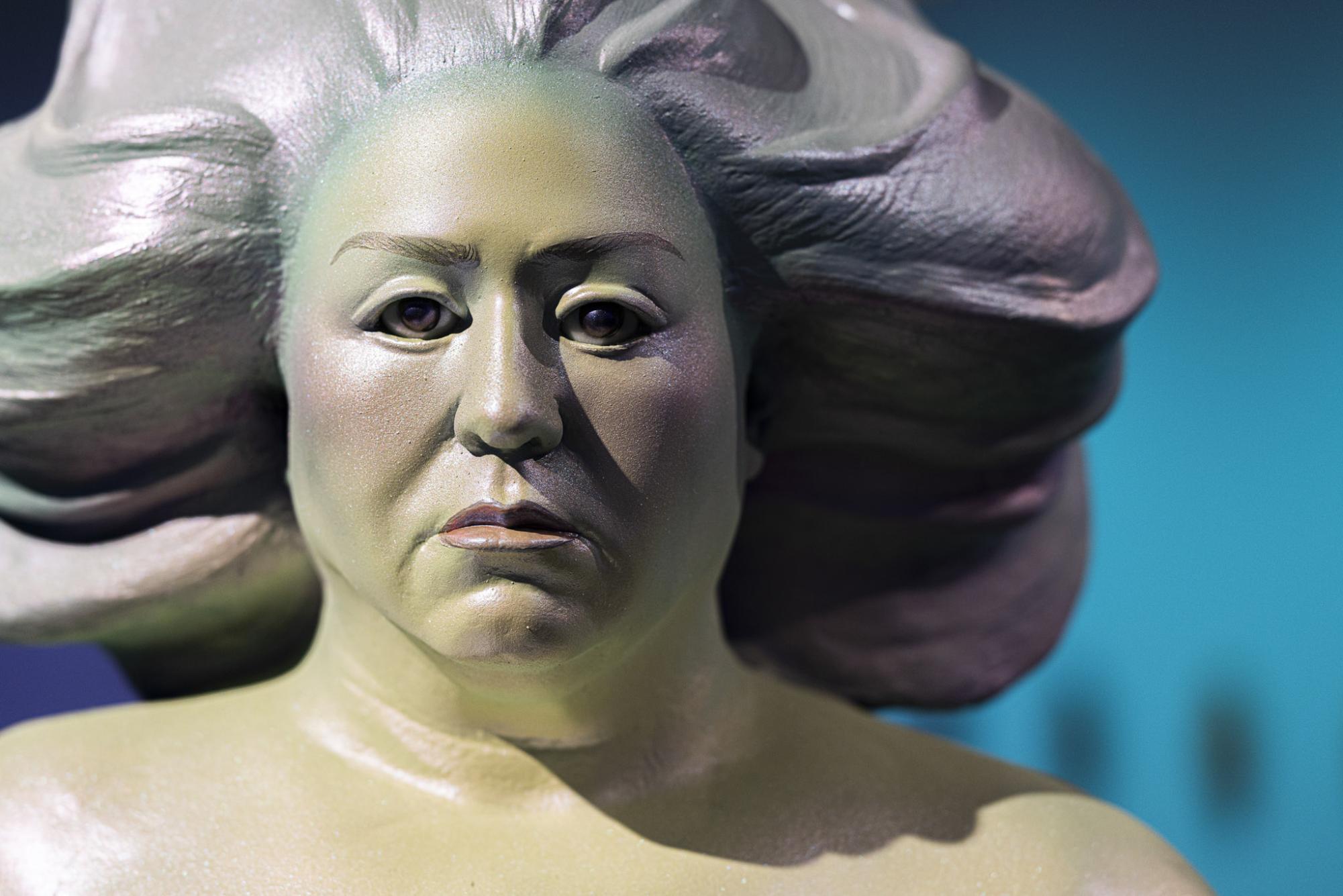
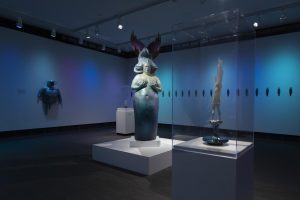
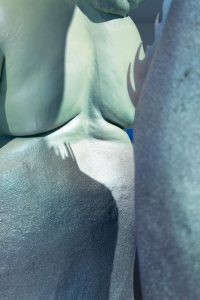
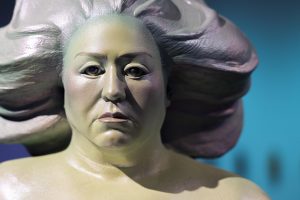
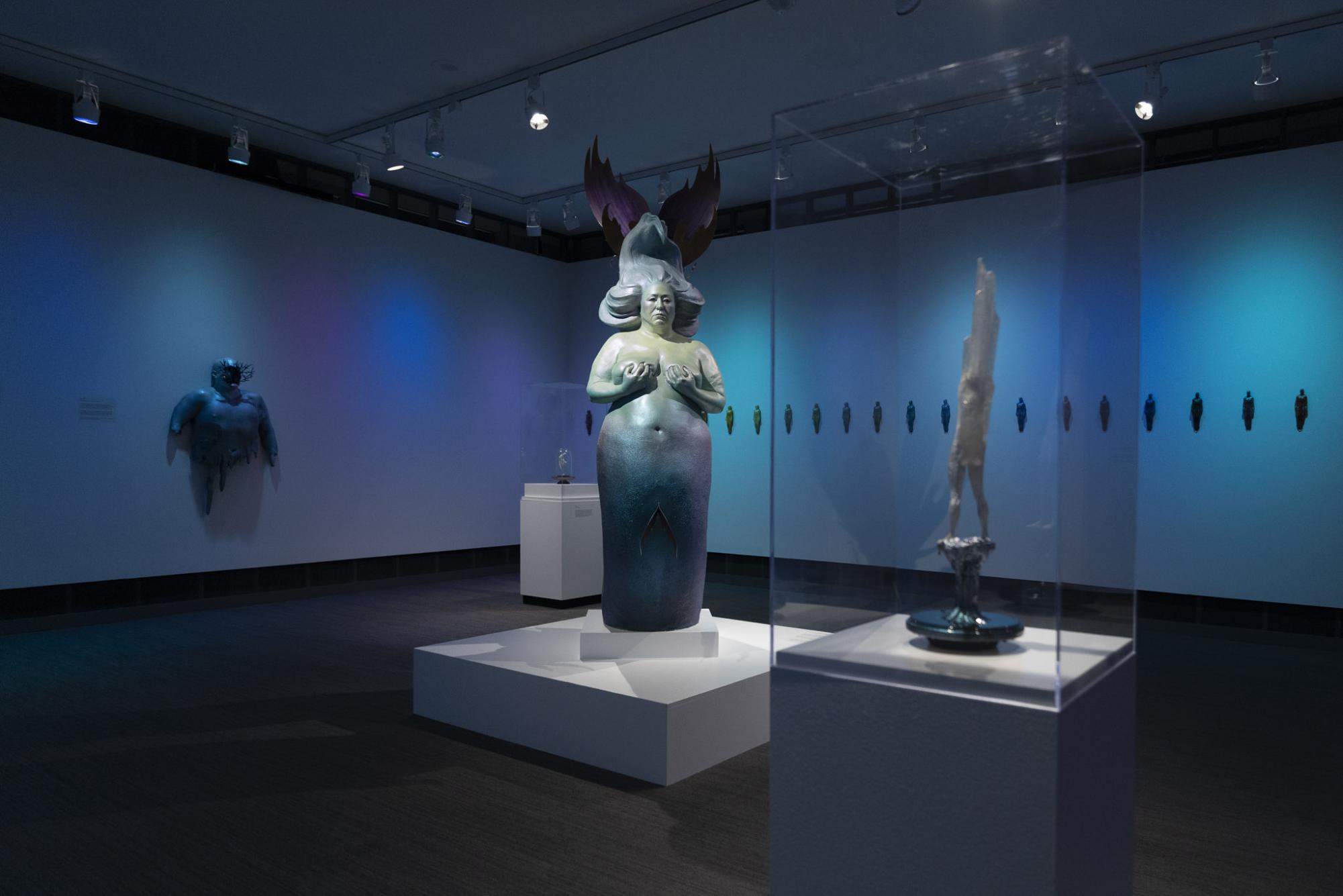
The largest piece in the collection, “Drift”, evokes an air of regal assertion. A mermaid towering over the viewer, her tail fanning out behind her head in a high-backed throne. Her hair is frozen in upward motion, a crown fit for a queen. Lording over the viewer, she radiates power, triumph and confidence. Qualities hard won by Stalheim himself.
-
“Drift” on display at the Washington Pavilion in Sioux Falls, South Dakota.
-
“Drift” on display at the Washington Pavilion in Sioux Falls, South Dakota.
-
“Drift” on display at the Washington Pavilion in Sioux Falls, South Dakota.
-
“Drift” on display at the Washington Pavilion in Sioux Falls, South Dakota.
-
“Drift” on display at the Washington Pavilion in Sioux Falls, South Dakota.
“I think what I’m proud of is my tenacity in overcoming these sorts of hurdles that queer artists have to jump through,” Stalheim said.
In recent years, the national shift favoring conservatism has led to countless bill and policy proposals that stand to harm queer people, like Stalheim, and their art. Earlier this year, House Bill 1239 was introduced in the South Dakota State House of Representatives.
“[This bill is intended to] revise certain affirmative defenses to dissemination of material harmful to minors and obscenity offences,” said Representative Lana Greenfield.
In layman’s terms, the bill was intended to strengthen existing censorship laws by criminalizing librarians and other public employees by prosecuting them for providing materials some consider harmful to minors.
“Curators could go to jail for content that pisses people off,” Stalheim said. “Like that’s a lot of my work. I mean, there’s penises everywhere. And that was really scary. And I did get political, and I, you know, I didn’t want to have to sacrifice this, all these years of hard work.”
The bill in question did pass into law in South Dakota, but with amendments removing all potential for criminal charges for librarians and other public employees, such as museum curators. There is a clear and present danger of government intervention to restrict access to any art the current majority party views as unsavory, including Stalheim’s work.
“I also think that art like this being displayed in South Dakota is really important because it’s exposure,” Yound said. “Without exposure, we are naive and we are bigots.”
Censorship comes in many different forms. It may come from the hallowed halls of an increasingly hollow democratic system, or it could come from Instagram. When Stalheim was creating “Drift,” his large mermaid sculpture that is a centerpiece of the “LORE” showcase, he originally envisioned her with detailed, entirely exposed genitals. But when sharing progress on social media, he faced immediate opposition to the idea.
“Okay so, you see those fins on the front of the mermaid? That was originally a vagina,” Stalheim said. “And I got so much fucking flack from everybody for putting the pussy on the mermaid. [Genitalia is] a big part of the sexual appeal, the lure of mermaids. And [when I showed it on a merman] everyone loved it, they loved it. But as soon as I do it on a woman… pushback. So it’s an abstracted vagina now.”
The social stigma associated with nudity has nothing to do with the quality of Stalheim’s work, but negative feedback tends to have a negative psychological effect on the creator, regardless of circumstance. The criticism made Stalheim begin to question the quality of his work. The blow landing on him rather than its rightful target, prejudiced attitudes about women’s bodies.
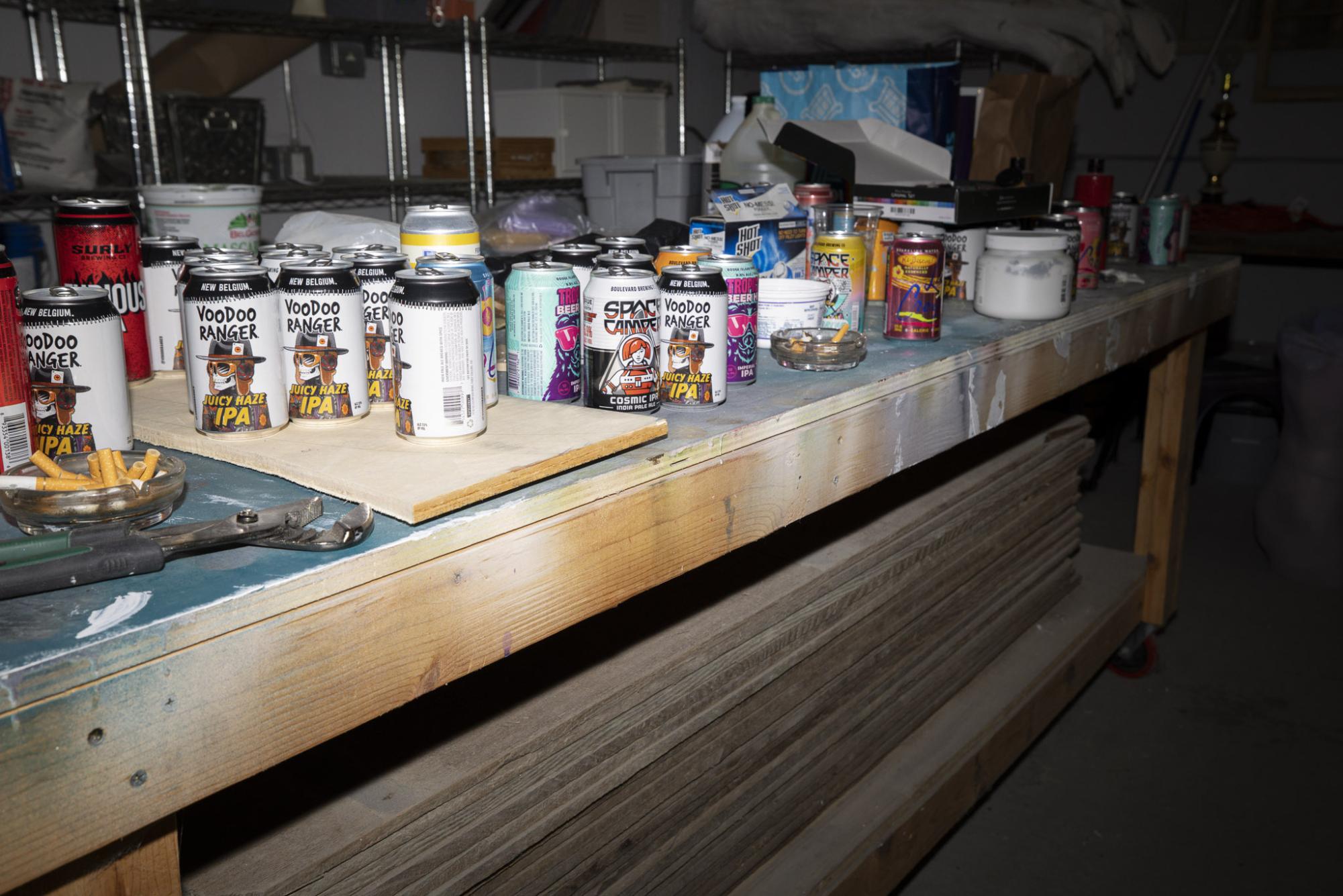
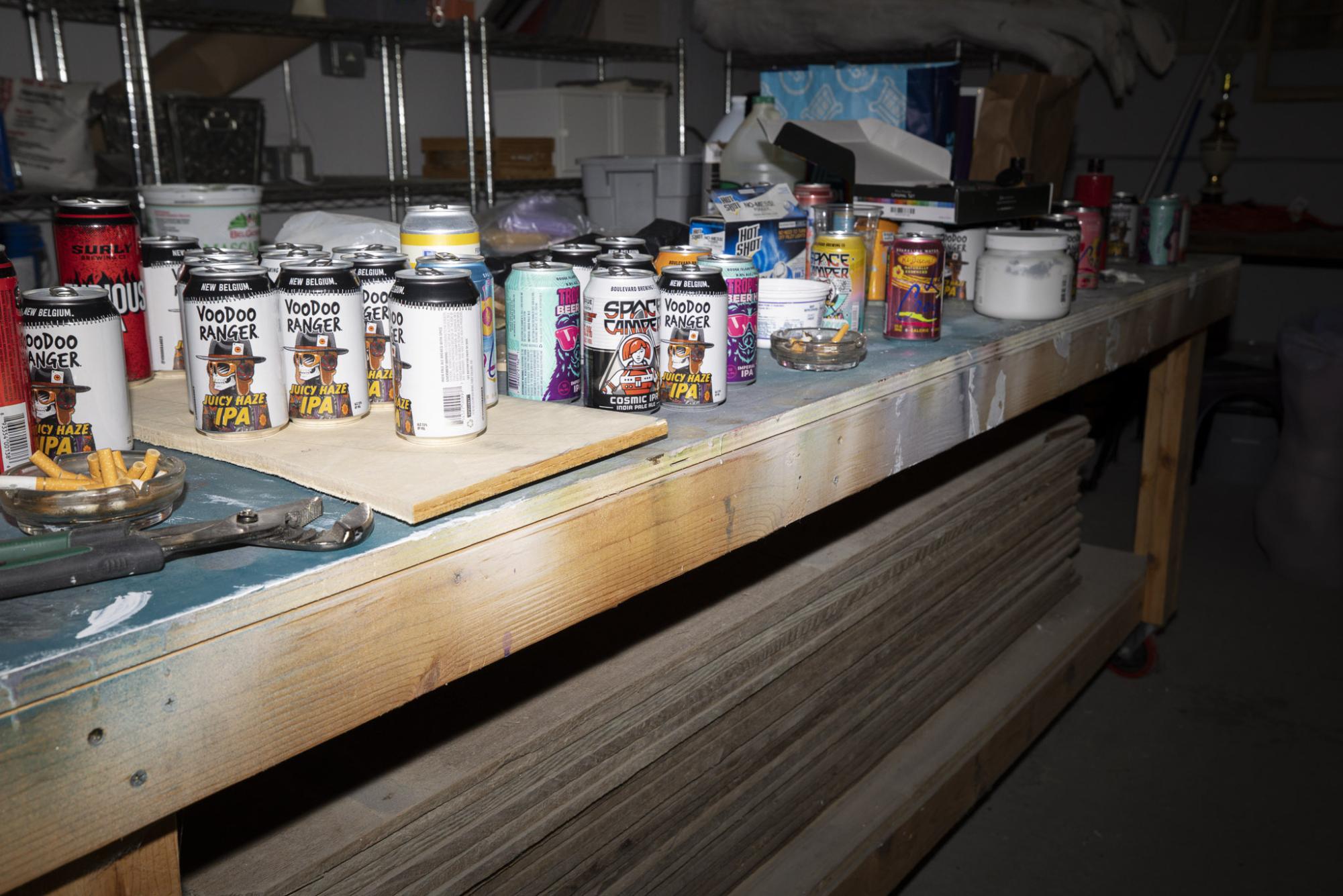
“I cried about it,” Stalheim said. “I was just like smoking cigarettes just looking at this pussy, and I was like, what am I doing?”
Stalheim’s art can be explicit, but that is not a negative attribute, but rather, a positive one. There are very few things that have remained consistent throughout nearly all of human history, but sex is one of them.
Before entering Stalheim’s show, there are content advisories warning viewers there is nudity present, so that viewers’ wishes can be respected. They don’t have to engage with the work if they don’t want to, but those within the community attempting to stop it from being created or displayed are actively antithetical to one of our nation’s most cherished rights, freedom of speech and expression.
Why tolerate such disgraceful behavior? Why stay in Sioux Falls? Stalheim doesn’t have to stay in South Dakota. He would likely achieve more recognition and financial compensation for his work elsewhere, but he stays because it’s important to him. He feels a sense of duty as a queer artist from South Dakota to give back to the blooming art and queer communities of his birthplace.
“I feel like I’m a part of that thread that keeps it progressing and keeps the culture of art and public art alive,” Stalheim said. “I feel like I do have some sort of responsibility to invest in this place, but it comes with a lot of drawbacks too.”
Aside from worldly motivations, Stalheim also has an intrapersonal hunger to create art. A yet-to-be-fulfilled mission. A quest in search of perfect contentment, rather than resolution. He says he’s at his best when he’s creating, and, simultaneously, it’s a coping mechanism for life’s hardships.
“When I make stuff, it gets me closer to this idea of not perfection, [but] radical self-love…there’s no such thing as perfection, but there is truth,” Stalheim said. “And I think when you are creating, you get closer to the truth.”
Much like journeys of personal discovery, Stalheim’s work develops and improves with time. It begins as a concept – for an artwork or of who one is as a person – and then details begin developing. Discovering the desired color doesn’t exist, a new one is pioneered. One may only have the courage to live in their hometown after they’ve moved away and then decided to return.
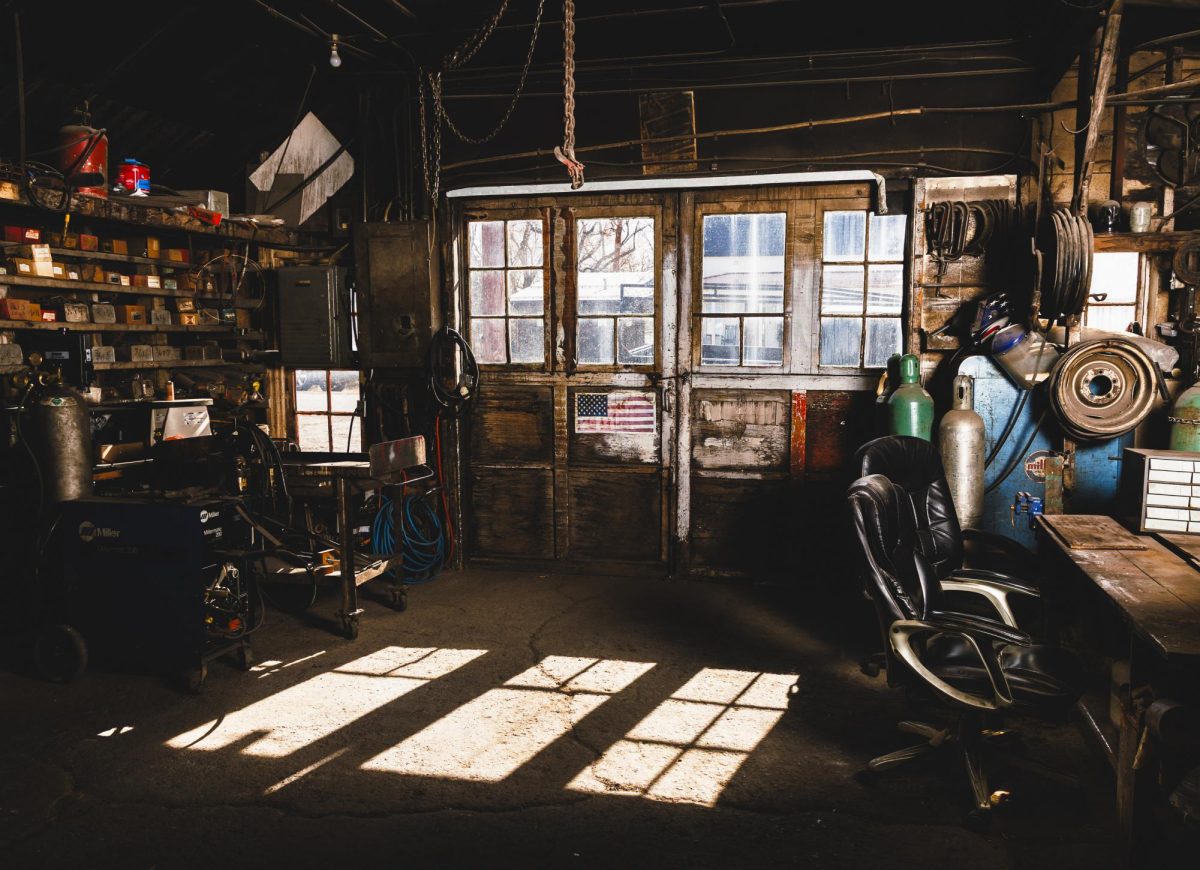
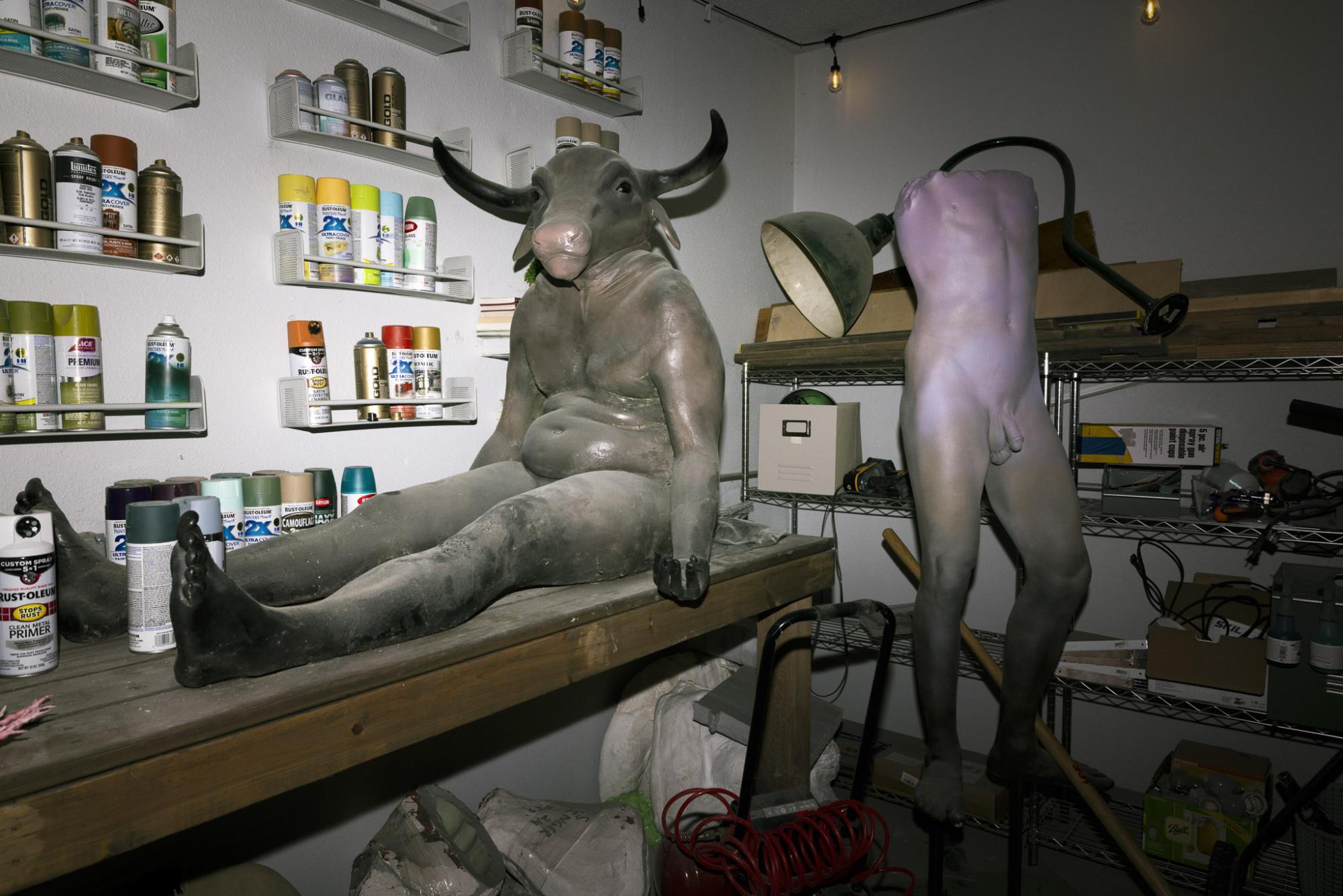
The perfect texture for a mermaid’s tail might come from the most unexpected of places – epoxy clay and truck bed lining. The perfect art studio might be hiding on a Facebook Marketplace listing. Whatever it may be, it takes time. And patience. And perseverance. Art takes time. Self-discovery takes time. And the seeker may even find that they are one in the same.
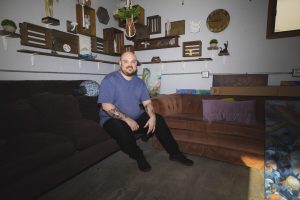
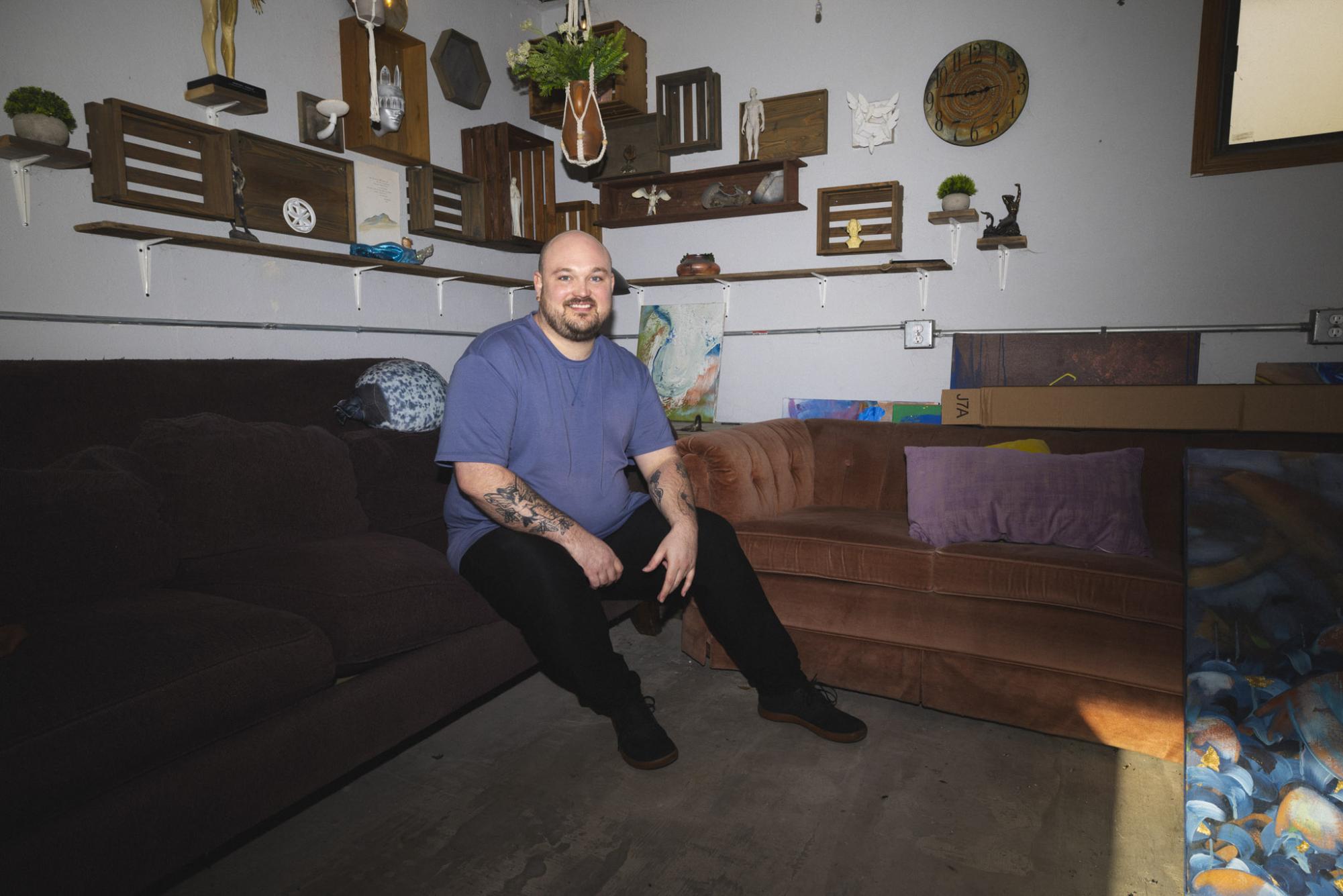
Cameron Stalheim is a queer artist from Sioux Falls, South Dakota. Lover of fanciful escape in his youth and a perpetual creator of things that take up space. Today, after years of working to achieve his art degrees, thousands of miles and dollars expensed on traveling for his art, endless cups of coffee aiding him in creation art and countless hours in pursuit of truth aka radical self love, he lives in Sioux Falls, creating fantical escapes for those around him, taking up space with his art.
-
-
-
“Drift” on display at the Washington Pavilion in Sioux Falls, South Dakota.
-
-
-